What charter fleets taught us about the yacht charter welcome book
The binder by the chart table gets wet, goes missing and falls out of date. Here is what replaces it on charter boats.
Every charter boat used to carry the same thing: a yacht charter welcome book in a plastic binder, wedged next to the chart table. It explained the boat, the base, the check-out rules and the best anchorages, and by mid-season it was damp, dog-eared and partly out of date. Charter companies we work with have been replacing that binder with boards on their boats that guests open on their phones.
This is the story of what we learned building them, and a practical guide for any charter operator, in the UK or anywhere else, thinking of doing the same.
Who uses boards on board
Our charter clients include Navigare Yachting, whose profiles on our system cover bases from Seget and Dubrovnik to Palma, Greece, Marmaris, the Seychelles and the Bahamas, and Nautika Centar Nava, with bases including Frapa, Pula, Slano, Split and Rogoznica. Orvas Yachting and NCP Mare are among the others. Some use Tap2Review boards to collect reviews at the end of the week, some use Infoboard as the digital welcome book, and some use both.
Tap2Review helped us collect authentic feedback from our guests with almost no effort. Since using it, our reviews have grown steadily, and so has trust in our service. Great tool for anyone in the charter business.
When we first posted about Infoboard, we wrote that more and more charters were using it to inform their guests about everything they need to know on their holiday. That has held true, and the reasons are practical rather than glamorous.
Why the binder had to go
- Paper and salt water do not mix. Binders get wet, pages stick together and inserts go missing.
- Information changes mid-season. A new fuel dock schedule, a closed restaurant or a changed base phone number means reprinting for every boat.
- Guests plan on their phones anyway. The next day is planned in the cockpit with a phone in hand, not with a binder.
- The base gets the same calls. When guests cannot find how to switch water tanks or where the shore power cable lives, they ring the base.
What goes into a digital yacht charter welcome book
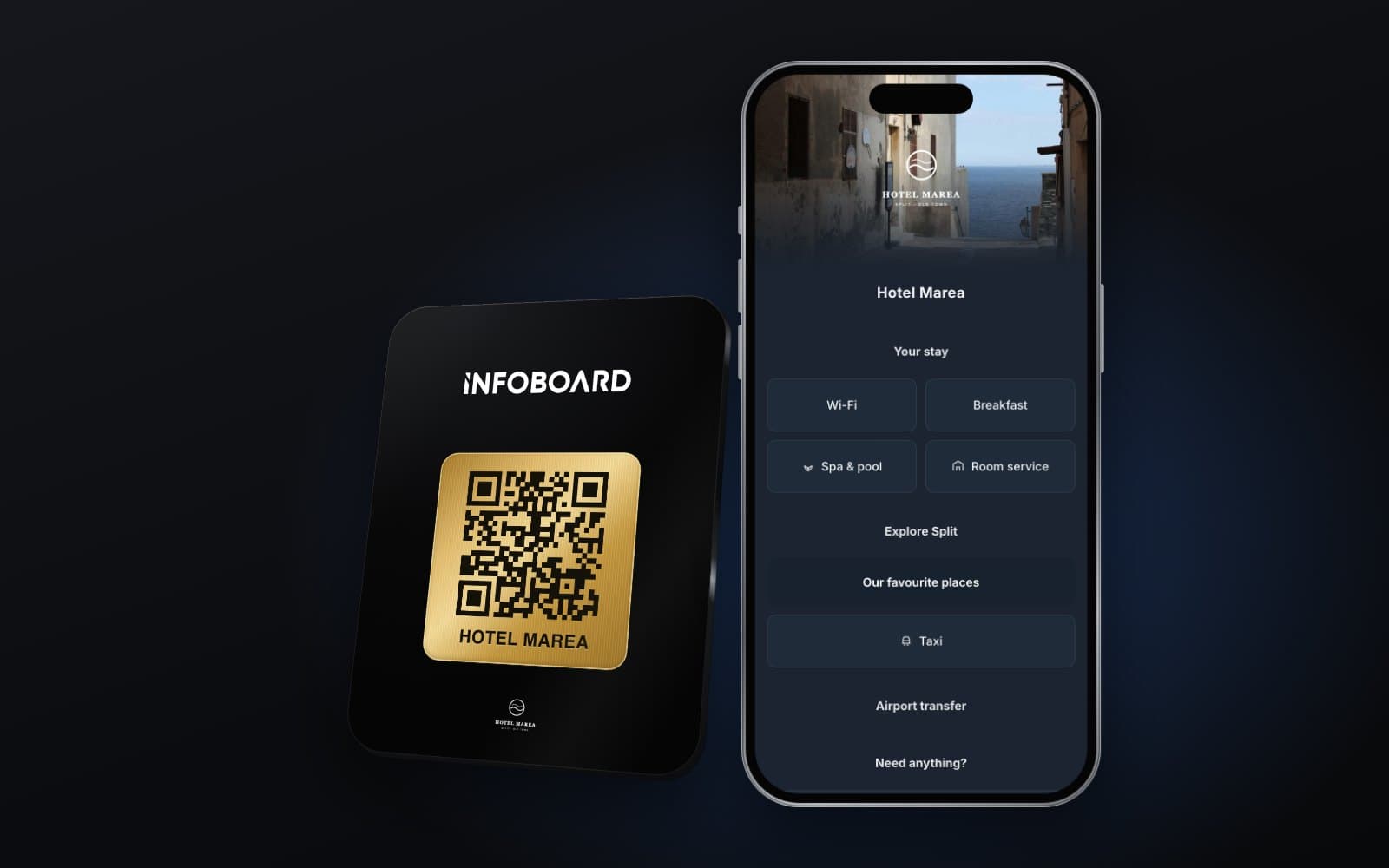
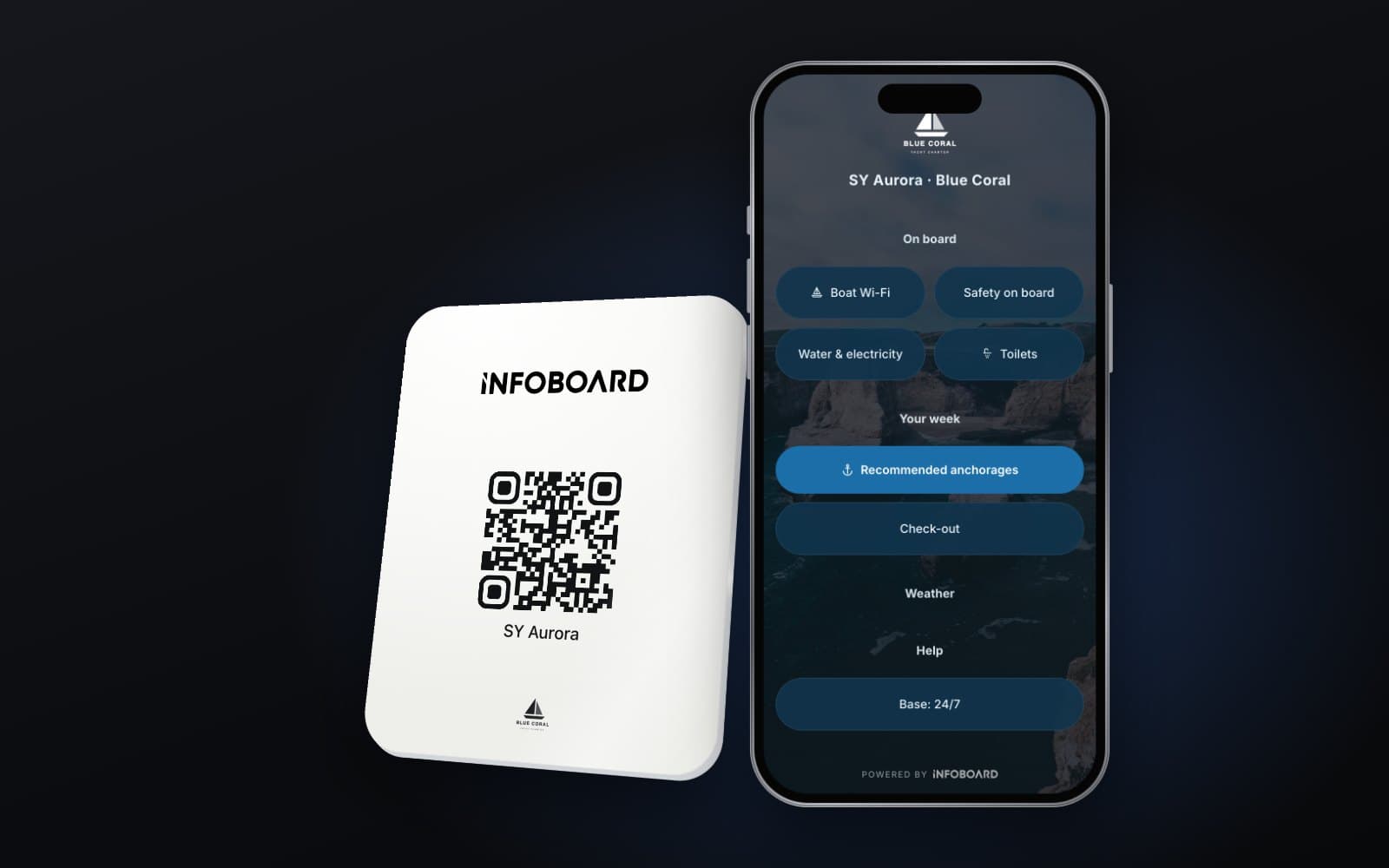
The charter demo board we built for clients groups the content into a handful of tiles. They make a good starting structure for any fleet:
- The boat: Wi-Fi, the water tanks and how to switch them, shore power, the toilets and the holding tank, the gas and the daily engine checks.
- Safety on board: where the life jackets, fire extinguishers and first aid kit are, and what to do in an emergency, including the radio channel and the base number.
- Suggested routes and anchorages, ideally on a map guests can open on their phone.
- Marinas and restaurants with berths along the way, with contacts for booking.
- Fuel stations and their opening times.
- Weather, with a link to a reliable forecast.
- Adventures and extras guests can book: excursions, transfers, equipment hire.
- Check-out: what time to be back, refuelling, leaving the boat and the keys.
- A button to call the base manager, and a feedback form.
- Special offers and the loyalty club for returning guests.
One board per boat
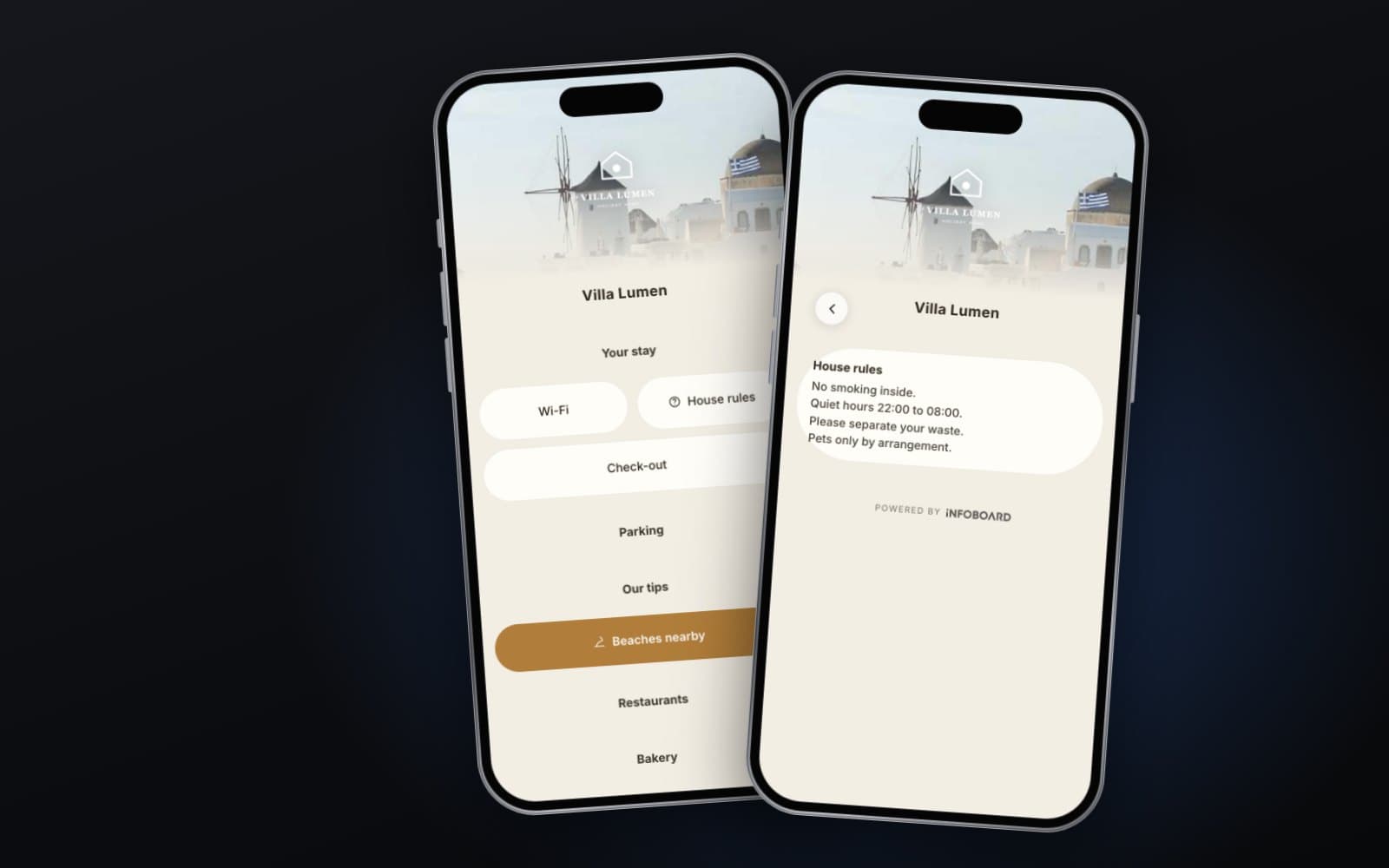
The most useful decision is to give every boat its own board. Shared profiles, such as the base, the area guide and the check-out rules, are written once and reused across the fleet. Profiles that differ, such as the boat's systems, its Wi-Fi password and the quirks of its toilets, belong to that boat alone. Guests only ever see what applies to the boat they are on.
Put the QR and NFC card somewhere everyone passes, by the companionway or the chart table. And send the link before arrival, so the crew can read the safety and check-in profiles on the way to the base rather than on the pontoon.
Reviews at the end of the week
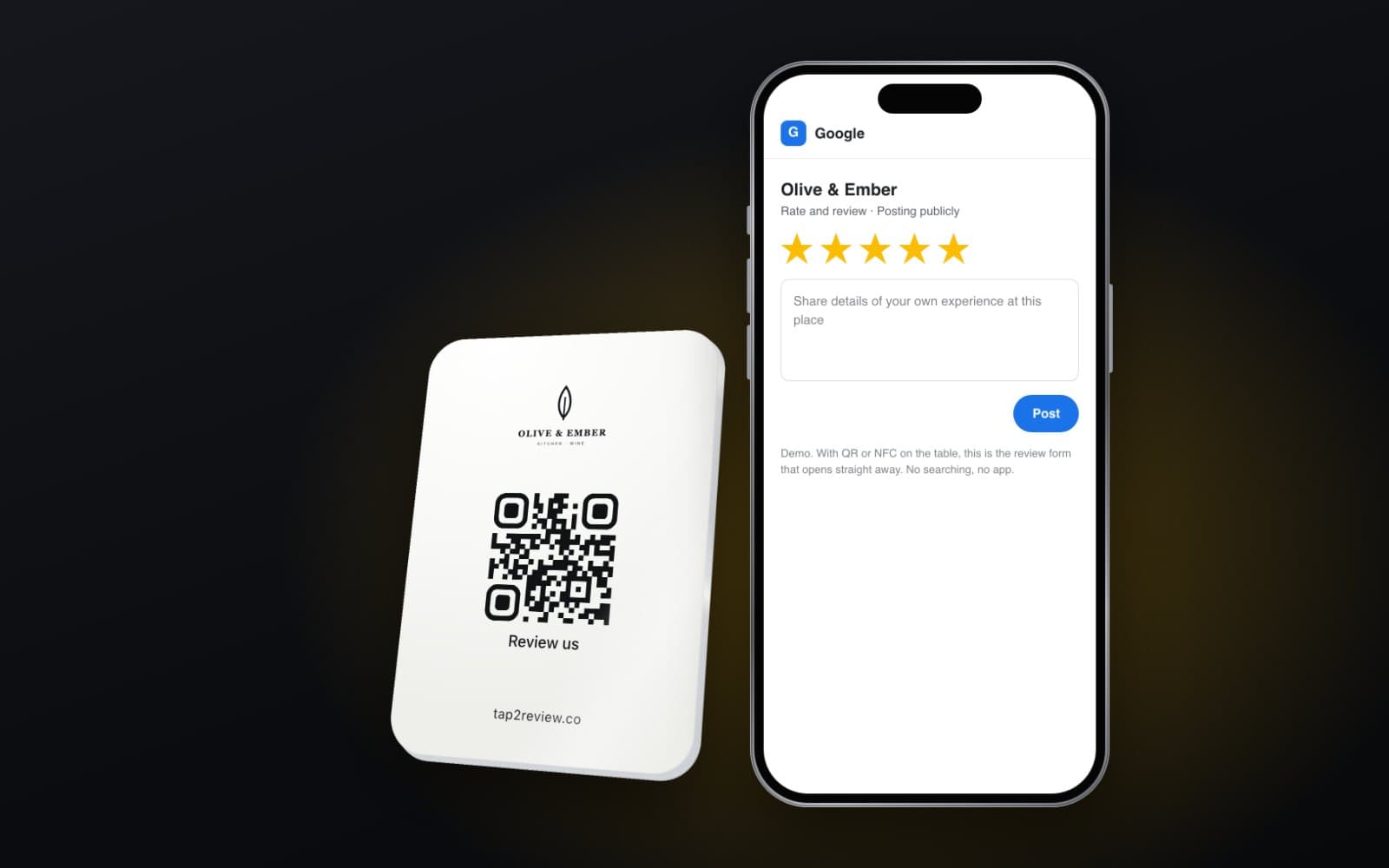
The last evening is when guests talk most about the trip. A Tap2Review board on board, or a review button in the welcome book, catches that moment. The description of our short film with Navigare Yachting puts it simply: let your client review your business in less than 20 seconds on any major review platform, while impressions are fresh.
The same rule applies here as anywhere: every crew sees the same public review buttons. A feedback option for a problem with the boat can sit right next to them, but never in their place. Google prohibits selectively asking satisfied customers for reviews, and UK law bans fake and concealed incentivised reviews.
Marinas and charter bases
The same approach works one level up. A marina or charter base can have a QR and NFC stand at reception and a link for every berth, covering opening hours, showers and laundry, the fuel dock, Wi-Fi, restaurants and shops nearby, the weather and the VHF channel. NCP Mare's board, for example, includes a profile on Šibenik and its surroundings, so guests arriving at the base have the area in their pocket.
Mistakes to avoid
- Copying the old binder word for word. Rewrite it into short profiles with clear headings.
- One board for the whole fleet, with every boat's details mixed together.
- No owner at the base for updates, so the digital version drifts out of date like the paper one.
- Burying the base phone number. It belongs on the first screen.
- Writing only in one language when your guests come from several countries.
How Infoboard fits
Infoboard is the digital welcome book we build for charter fleets, marinas, hotels and holiday rentals. We turn your binder into profiles, one board per boat, in your colours; you update them from a dashboard, and the QR and NFC cards on board never need replacing. The Infoboard page has a live yacht demo: open the safety profile and the check-out profile the way a guest on board would.
What should a yacht charter welcome book include?
The boat's systems, safety equipment and emergency steps, check-in and check-out rules, routes and anchorages, marinas, fuel, weather and the base contact.
Do charter guests need an app?
No. A web-based board opens in the phone's browser from a QR code or an NFC tap.
Can each boat have its own information?
Yes. Shared profiles are reused across the fleet, and each boat keeps its own systems and Wi-Fi profiles.
Should we still keep paper on board?
Yes, for essential safety and emergency information. Everything else can live on the phone.